Writing without Permission: letting go of the gatekeepers in your mind.
Unforgettable figures: a smuggler treating migrants as disposable business assets, an SBS Veteran forced to question his own humanity, and a weak Prime Minister sacrificing his principles for political survival.
I never knew one needed permission to write, but how free are any of us from the influences of constant media and social pressures over many years – very many years in my case.
Writing my first novel at the age of 77 was not the consummation of all those years of input, but a reaction to it; an explosion of revulsion at the constant barrage of half-truths from politicians, the self-interest, the human cost (to migrants and citizens alike), a country rendered defenceless in the face of enemies and bankrupt with a level of debt that will shackle our grandchildren for many years to come, and last but not least, wasting precious resources pandering to ideological nonsense like Net Zero and LGBTQ…XYZ .
Watching the news, and the farce that Prime Minister’s Questions has become, for example, prompted one of the early scenes in my book
I wasn’t able to focus the book on every cancer affecting our country, but homed in on the undeniable problem of excess immigration and illegal migration in particular.
Migrant Crisis was written from a passion that tackles the corruption in government head on and the dire consequences of self-serving and ideological policies that will destroy the UK as we know it if left unchecked.
Having said all that, Migrant Crisis is not a polemic, it is a novel, a story designed to illustrate, and possibly exaggerate the nature of the beast in a way that tugs at the heart strings and gets under the skin of all the characters involved. It also allows the author to have FUN along the way and write scenes that should hopefully never happen in real life.
Nevertheless, by writing in novel form I believe some of the points have been made even more forcibly.
“Migrant Crisis isn't just a book; it’s a warning. It’s a cinematic, bone-chilling exploration of what happens when a government’s survival instinct overrides its humanity.”
“Some thrillers entertain. Others unsettle you. MIGRANT CRISIS does both and then leaves you staring at the sea with a cold feeling in your chest.”
These review extracts are included to demonstrate that a novel can be anything you want, and that the medium gives you the freedom to take the reader in any direction you wish – to entertain them, to unsettle them, to tug at their emotions and to make them think.
The freedom of this wonderful medium allows you to give full reign to your imagination, to go where nobody dares, and to leap sky high over any gatekeepers holding you back in your mind.
If you write from passion, and set out to enjoy the process, you will quickly overcome any inhibitions based on preconceptions burned into your consciousness from all the influences constantly bombarding you. Once you get into the zone, let your imagination fly and take you where it will.
Personally I do not believe in setting out a rigid structure before starting work on a book. By all means have a rough idea where you are going and a set out a few key points you are keen to build in along the way, but unless all you are interested in achieving is to write a quick and easy formulaic series of stories, just let the writing flow out of you – you will feel so much better for it and who knows where you will end up, that is the FUN OF WRITING.
In my case that is exactly what I did; decided on the initial theme, started writing and let the book effectively write itself. By enjoying the process and giving yourself permission to go where no-one in your genre has gone before, you will quickly overcome those inhibitions that might put a brake on your creativity. You may also find by writing in this way that your sense of humour flows through and prompts a few asides, maybe to break the flow of a serious passage, to lighten the mood or insert a little dark humour to keep your readers interested.
And don’t worry about trying to shoehorn your book into a specific genre – that is a restriction you can do without and will immediately put up one of those barriers we are trying to avoid. I didn’t even think about genre before I started writing, partly out of naivety I must admit, and the end result was to dip a toe into at least half a dozen different genres which in my view makes it unique and even better.
Ok at some point you might need to stop and take stock. I ended up creating a timeline and spreadsheet to ensure all the plotlines stayed in logical synthesis, and that process required several changes before everything flowed smoothly and logically.
When all was done I then went back over the manuscript god knows how many times refining and improving, but the basic creativity was already there by that time and it will always take work to create a polished finished product.
That is also the time to call in a well-qualified editor. Theirs is not a creative job but they will help turn your creation into a product you can send out into the world with confidence. As a first time author especially, publishing your work for the world to see and “losing control” as you have no influence over the way people will relate to it, is the scariest thing of all – another reason to hire a professional pair of eyes in the form of an experienced editor to minimise the embarrassment of critical feedback once it is published.
The only one you need permission from in the creative process is yourself, so give yourself permission and GO FOR IT, enjoy the process and ignore those niggles that creep in from the back of your mind. If you really end up writing something that is plain out of order you can correct it later or in the editing process, and don’t be afraid to use a good editor because they are worth their weight in gold and will view your work with a cool professional head to iron out any anomalies and help you end up with a book to be proud of.
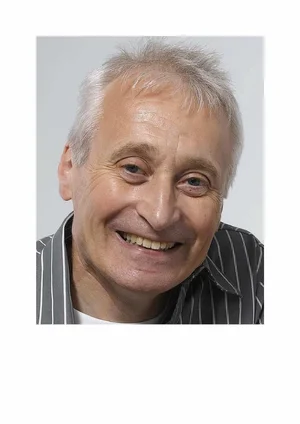
John Steel is a UK-based novelist whose debut thriller, Migrant Crisis, explores the collision between politics, human ambition, and the struggle for survival in a rapidly changing world. After a long career supporting individuals and businesses through complex financial and regulatory challenges, he turned to fiction to explore the human consequences of policy, power, and moral ambiguity.